This article is from the old blog in 2020:
From the start, we had planned a test weekend about a month before we actually head off on our expedition, to test all the newly built material, our equipment, how our vehicles handle the extra loads and how to pack them. Further we wanted to experience how we would cope with sleeping in our new tents, cook in the West African bush, driving our heavy vehicles across potholed filled roads or sandy pistes. The destination should be close to Abidjan but yet far away to drive for a few hours and hopefully have all types of road surface to offer. Also we really wanted to camp on our own and not stand in a car park of some lodge somewhere at the beach.
Ulrich asked friends who had been exploring the Côte d’Ivoire camping and had been suggested to head to the National Park of Azagny. It lies about 75km to the west of Abidjan between the Bandama River and the Ébrié Lagoon. The park was founded in 1981 and occupies an area of about 17,000 hectares. The park is surrounded by slightly higher ground and consists of a broad, often waterlogged, basin in which the water level fluctuates. The climate here is wet all year round, with an average rainfall of 2,300 mm. About two thirds of the park consists of swamps dominated by mangroves and there is additionally some moist forest and coastal savannah. There are elephants, chimpanzees and many species of monkey in the forests, as well as bushpigs, gazelles, antelopes and African forest buffaloes. All three species of West African crocodile occur here but in low numbers and the African manatee occurs in the Ébrié Lagoon. The park is an important habitat for wetland birds and was recognized as such when it became a Ramsar site in 2005. Some bird species of note include the cattle egret, the little egret, the grey heron, the black-crowned night heron and the peregrine falcon.
Driving through one of the densely populated areas of Yopougon, a city within Abidjan, on a Saturday, it takes you about 2,5 hours from Abidjan to reach the gate of the park. The road along the Ébrié Lagoon is of decent quality with a few potholes here and there. As the entrance to park was not indicated on any map properly we had agreed to meet someone from the Office Ivoirien des Parcs et Réserves (OIPR) at a local pharmacy in Irobo, a village close to the entrance of the park. Monsieur Cissé arrived on a tractor and introduced himself as the President of the local association to support the well-being of the park and the work of the rangers in the park. They have about 40 members, all locals from the villages around the park but mainly in the North. Through lectures and seminars they try to educate especially the children of the surrounding villages how important it is to keep the park and nature intact, respect the boundaries, protect the fauna and flora by not invading the park and plant palm trees or rubber trees for commercial use or poach animals, in particular gazelles and antelopes. Unfortunately, as it is often the case in Africa, such initiatives can only reach out far and make a difference if they are able to find sustainable funding. This association relies exclusively on donations from wealthy Ivorians, who have a heart for their home village and region, but now live and earn money in Abidjan or abroad.
M. Cissé guided us through the dirty back streets of Irobo, down some very narrow dirt tracks past fields and palm and rubber tree plantations to the Eastern gate of the park “base-vie de Sonaye”. He left with some guys on a motor tricycle to deliver water for us to the camp as we later found out.
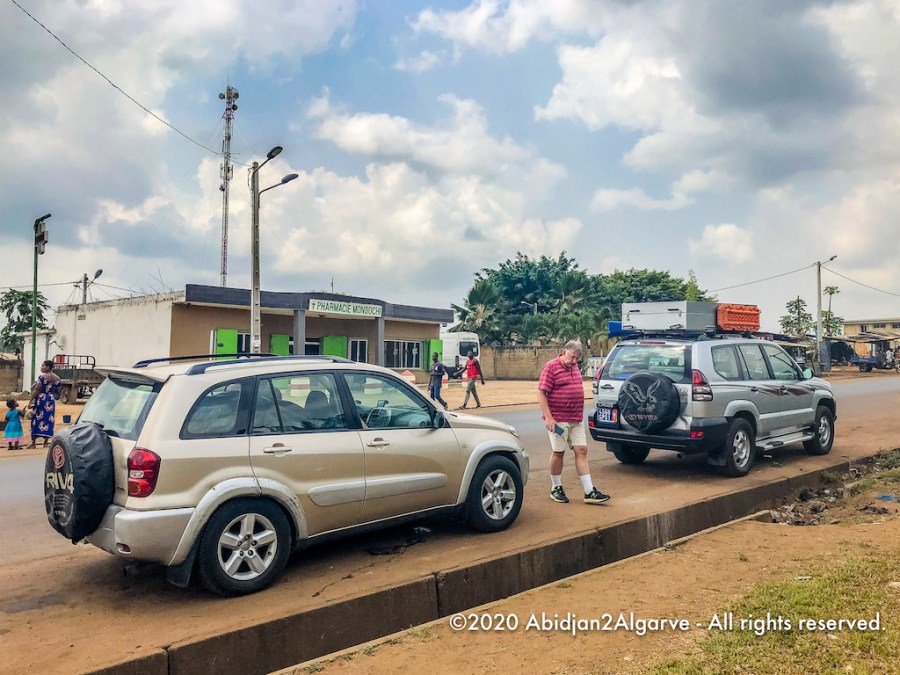
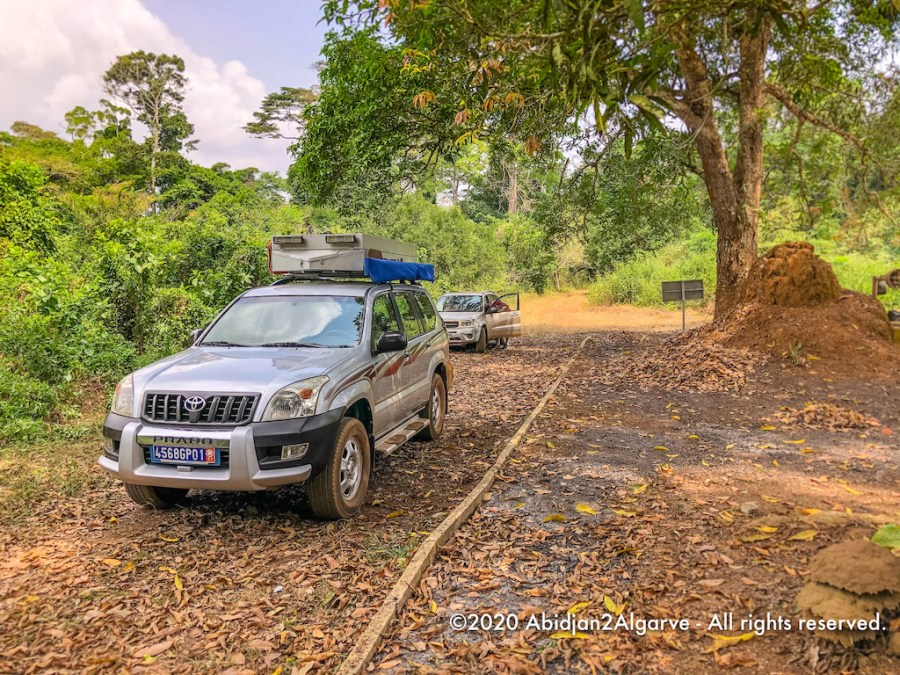
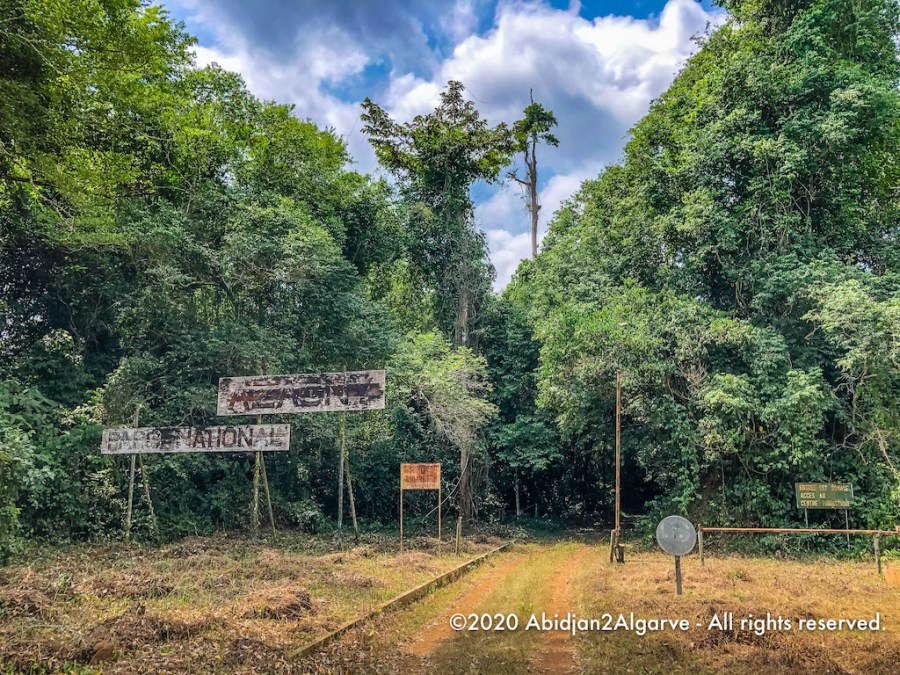
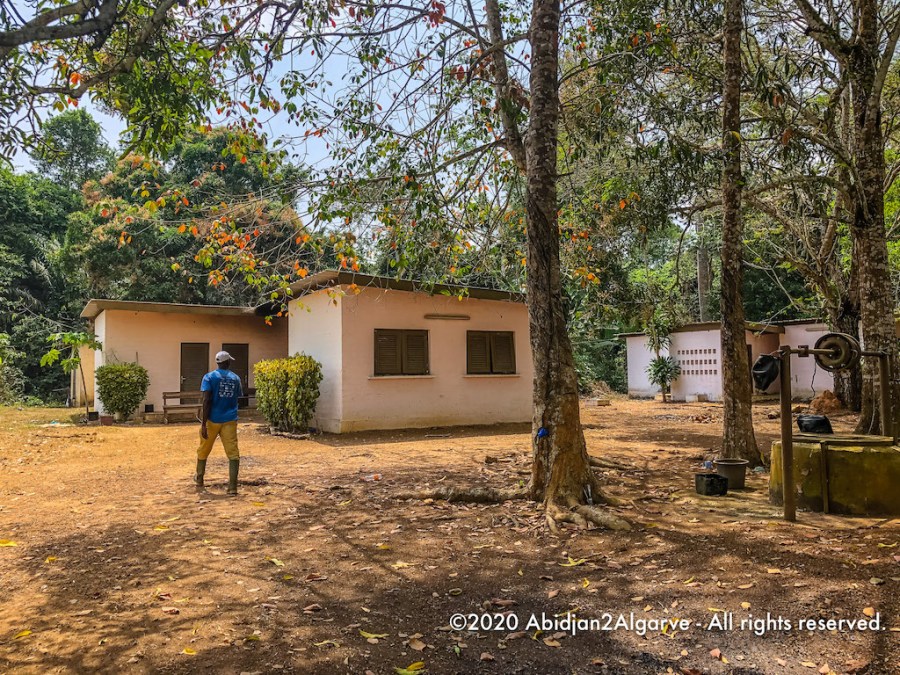
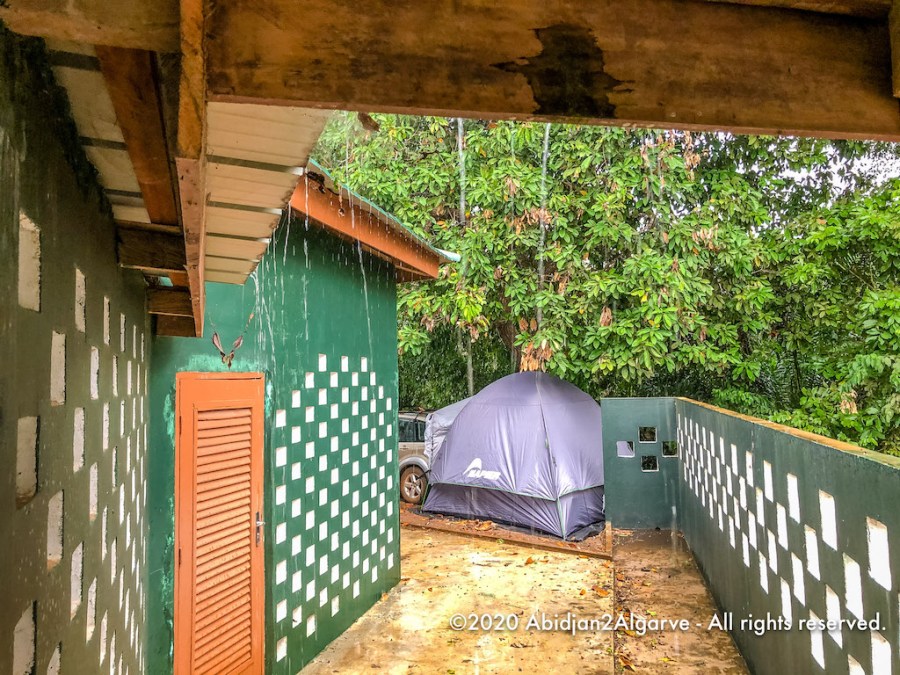
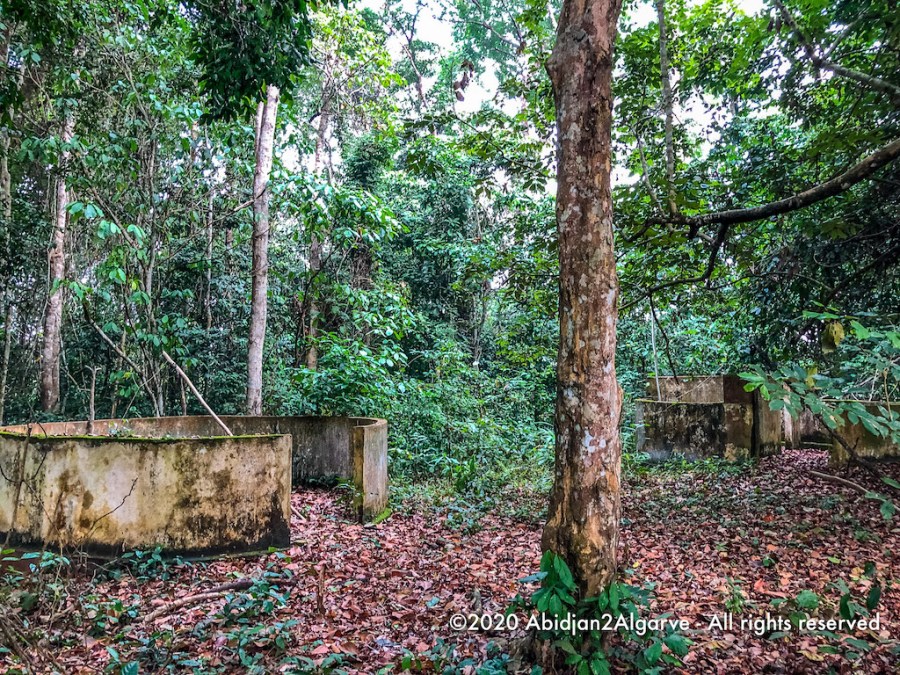
Here we waited for about an hour and a half for the official guide Omar who had been asked to stay with us for the two days. But that gave us time to have very welcomed lunch and finally install and test the tire pressure monitoring system on THE RAV. This is when we noticed that the rear tires were on too low pressure. With Ulrich’s compressor we inflated the tires back to their normal value. In the meantime Omar had arrived. He works a freelance guide for the park authorities and has been in and around the park since its existence. He led us with his old two-stroke enduro motorcycle to the camp site called “Campement Hôtel”. This is the only official camp site with the park’s boundaries. The buildings were destroyed in the civil war in the early 2000s and then left in disrepair for many years. The scars are still visible today although the site has been cleared of all the bush that had grown over it.
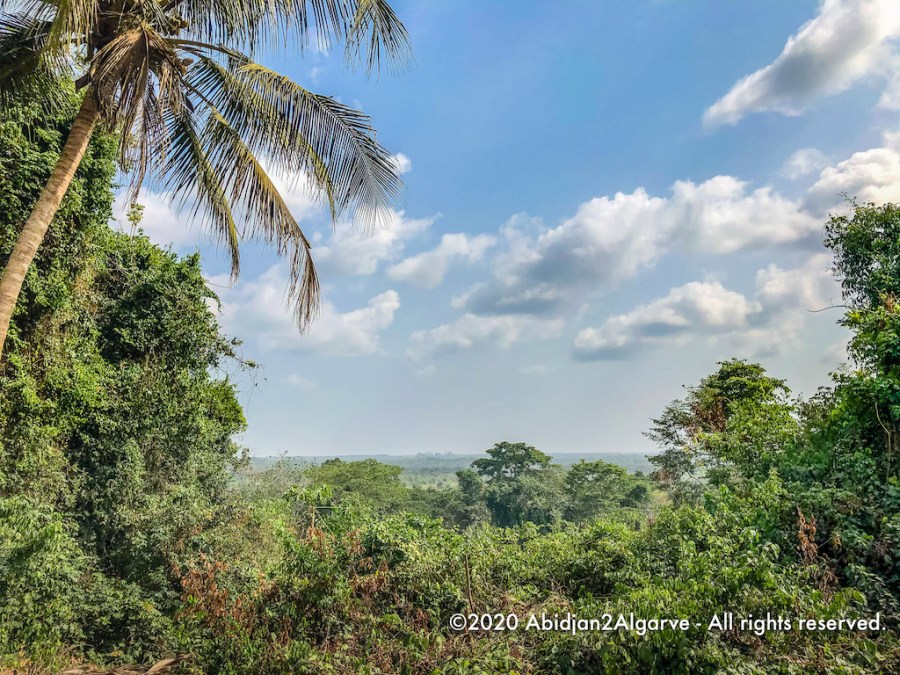
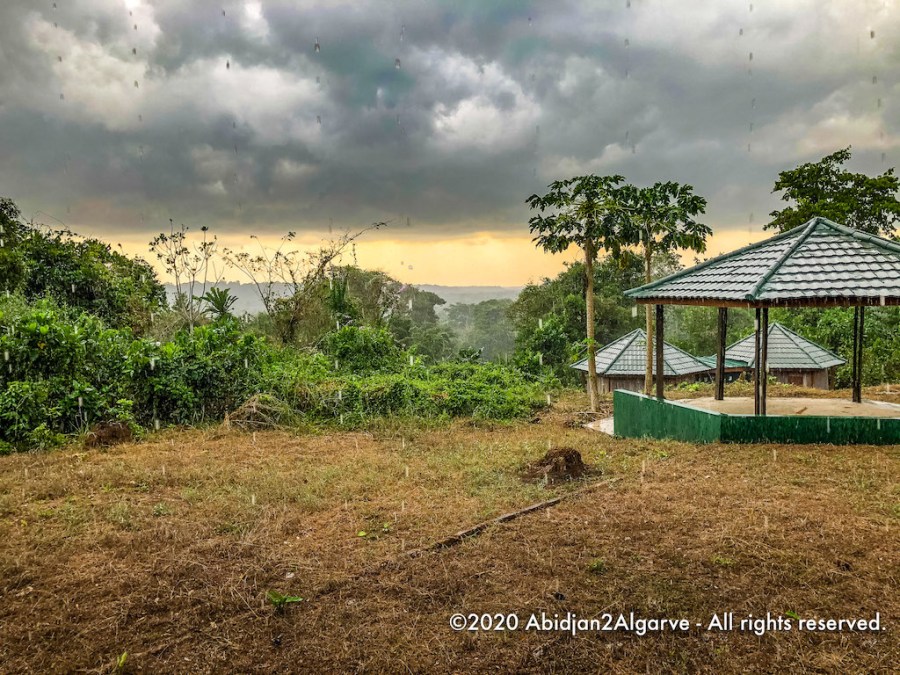
Apparently there is an investor who has built 6 new chalets with en-suite bathrooms but they still lack electricity, water and interior. We were assured that they would be functioning very soon. In African time, that means probably in a year or two. The slightly elevated site has certainly got potential as the view is lovely over the swamp areas of the park. Due to its openness and exposure there is also a welcoming cooling breeze.
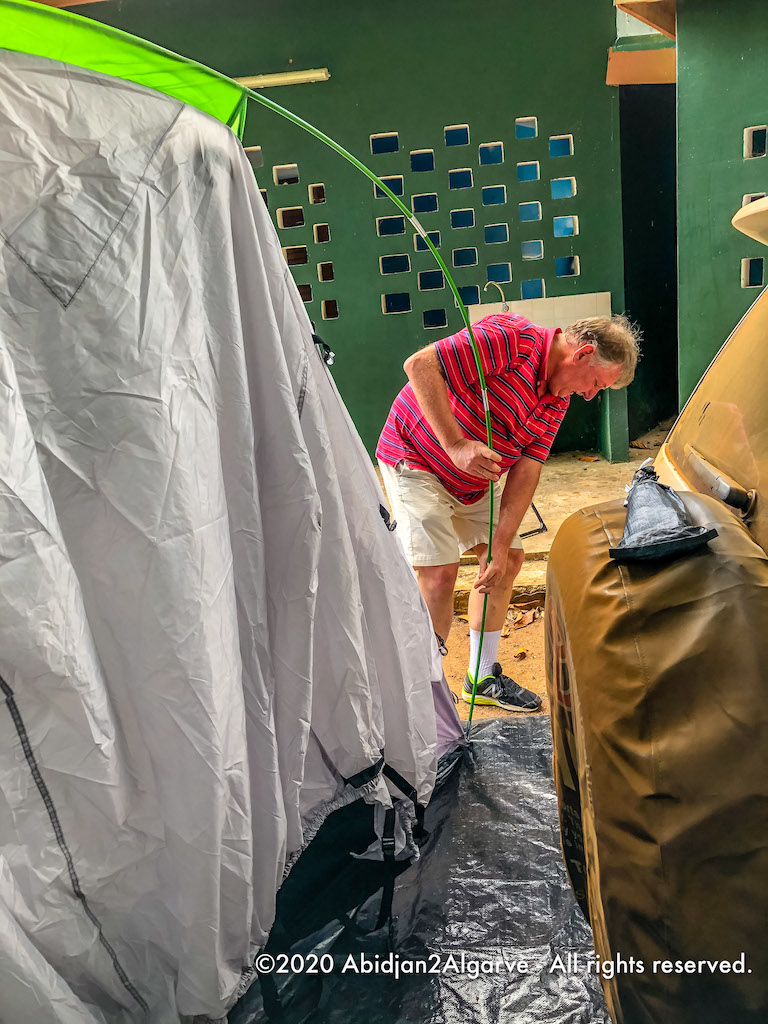
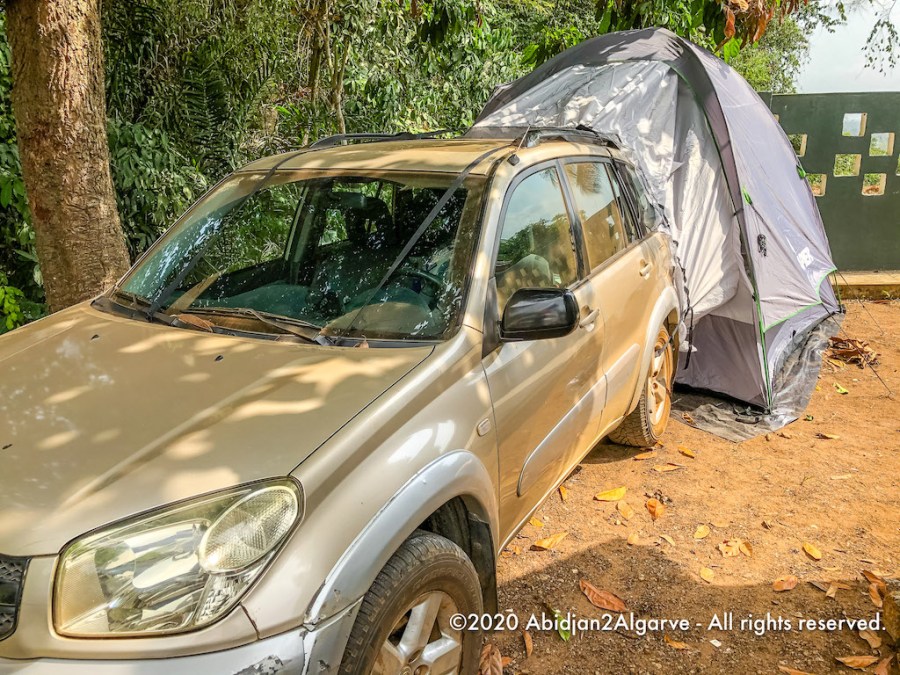
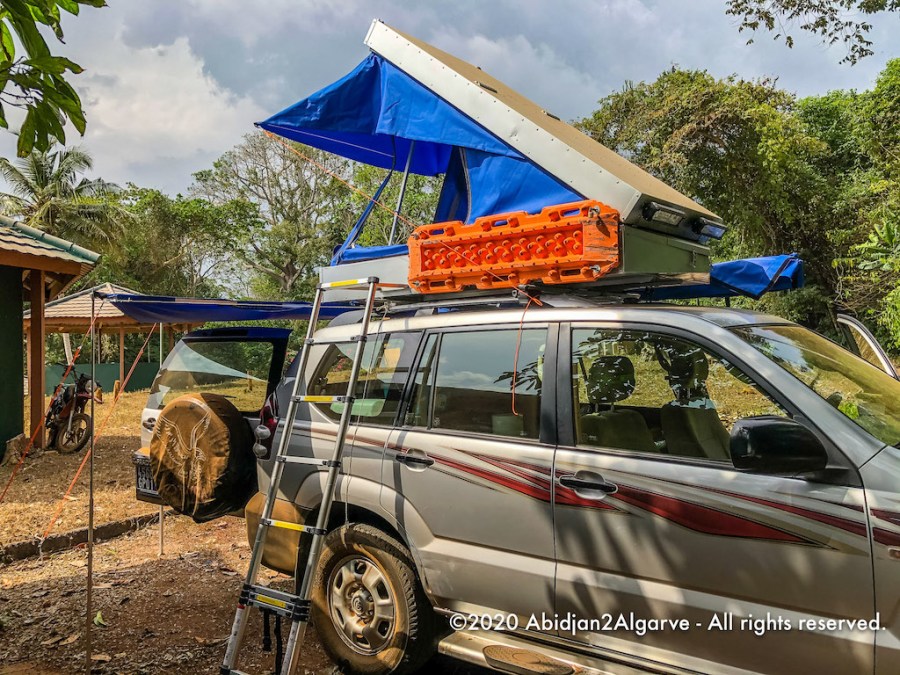
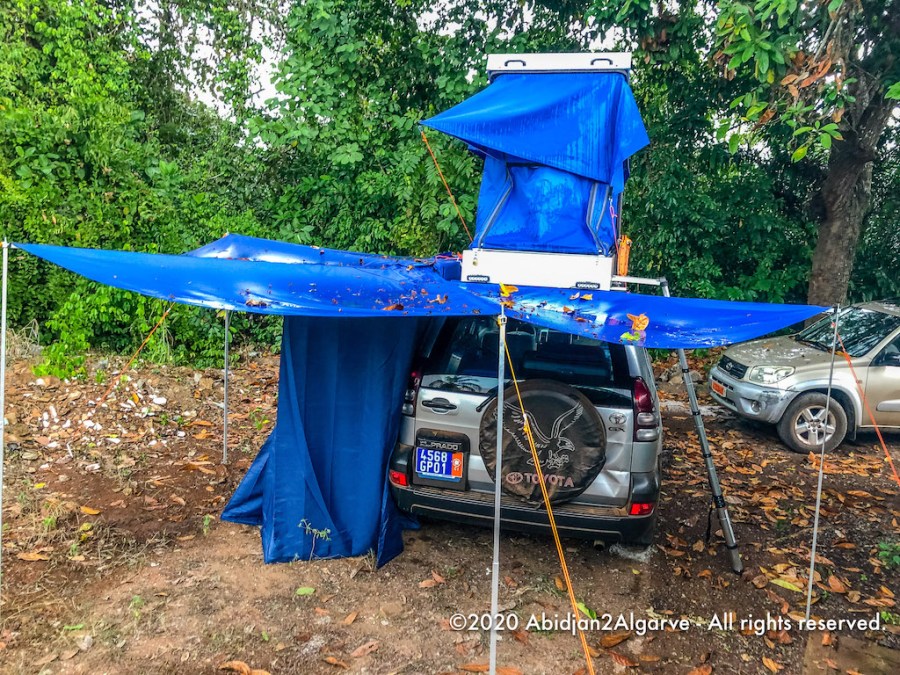
We chose the only spot with a bit of shade next to the former restaurant to park our cars and set up our camp. Charlotte and Trevor practised setting up their tent that is attached to the rear of their car, THE RAV. Ulrich swung open his roof top tent and unfolded the awning he had built. Quickly we were done and could enjoy the breeze.
A little later our contact person from OIPR lieutenant Soro arrived and greeted us. A very friendly and supportive gentleman. We paid our park fees and a fee for our guide Omar.
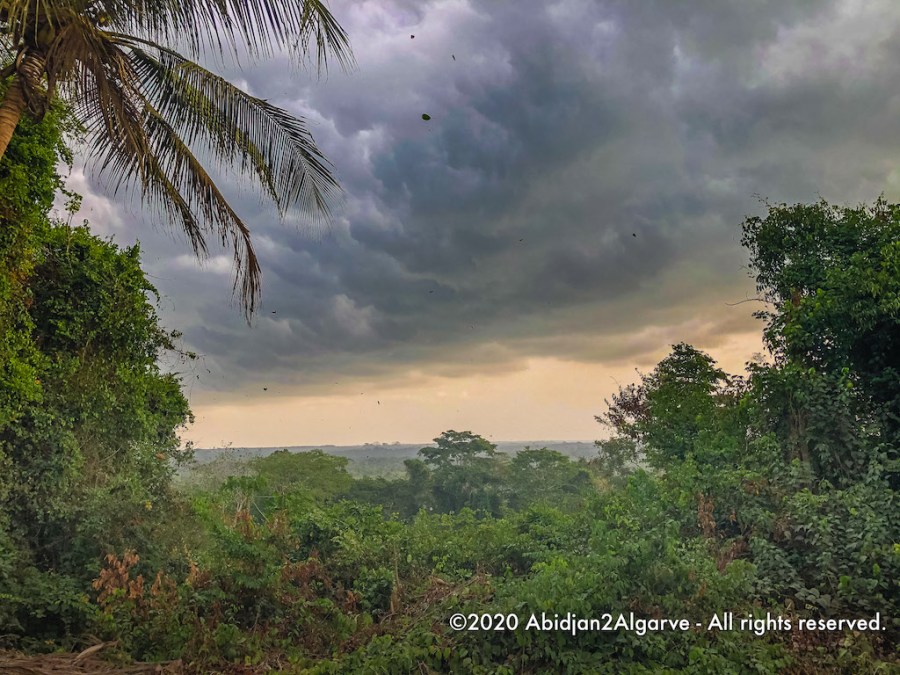
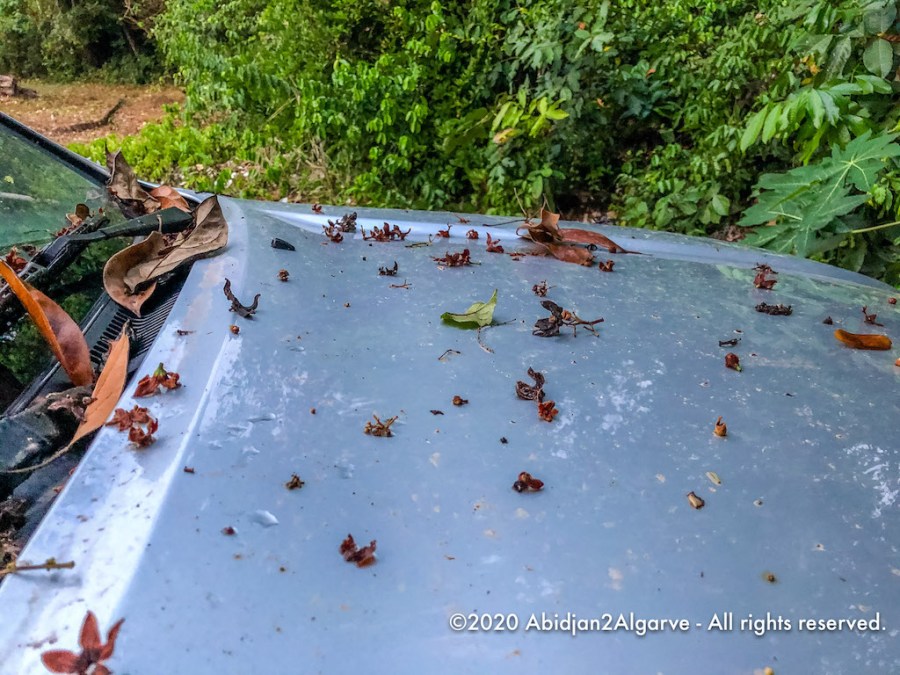
The sky turned darker and darker. Ulrich quickly closed all sides of his roof top tent. We heard thunder in the distance for a while and now the breeze turned into strong gusts that blew al kinds of leaves and dried flowers down. Then the thunderstorm had reached us and it rained heavily but fortunately just for a few minutes. A good test for our equipment! All survived and stayed dry. What a relief.
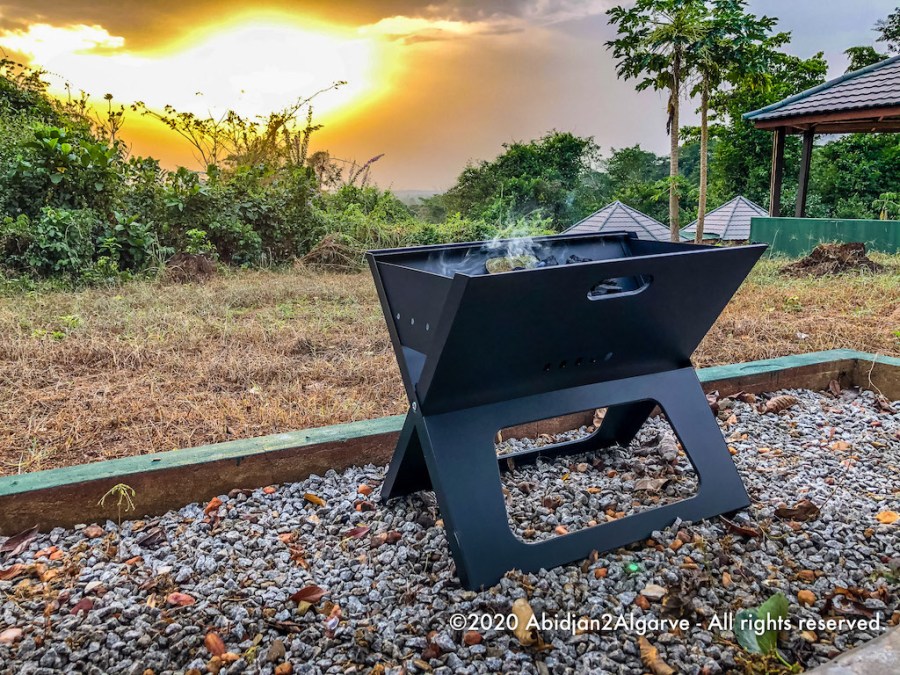
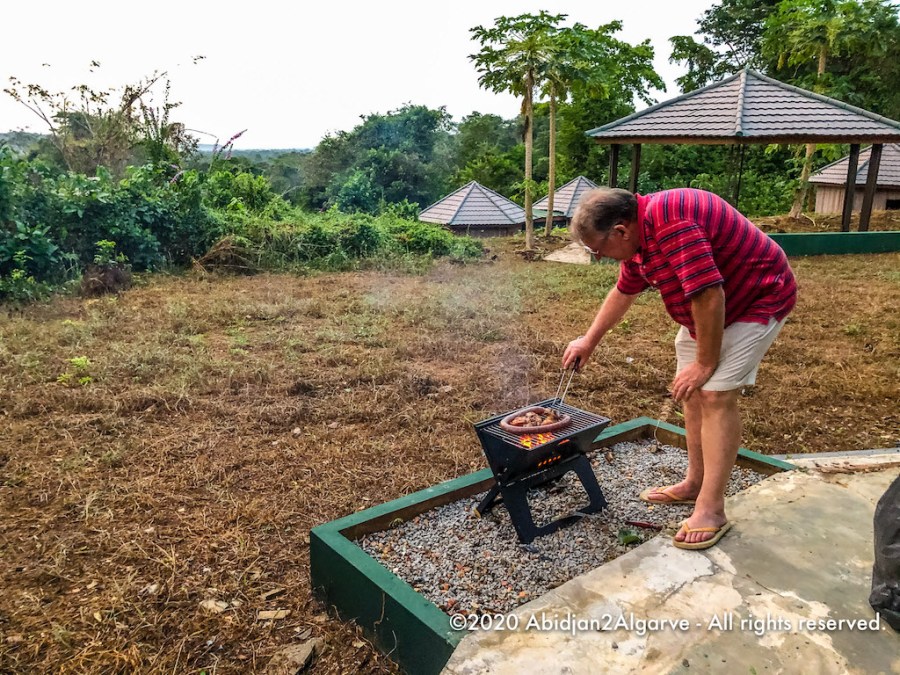
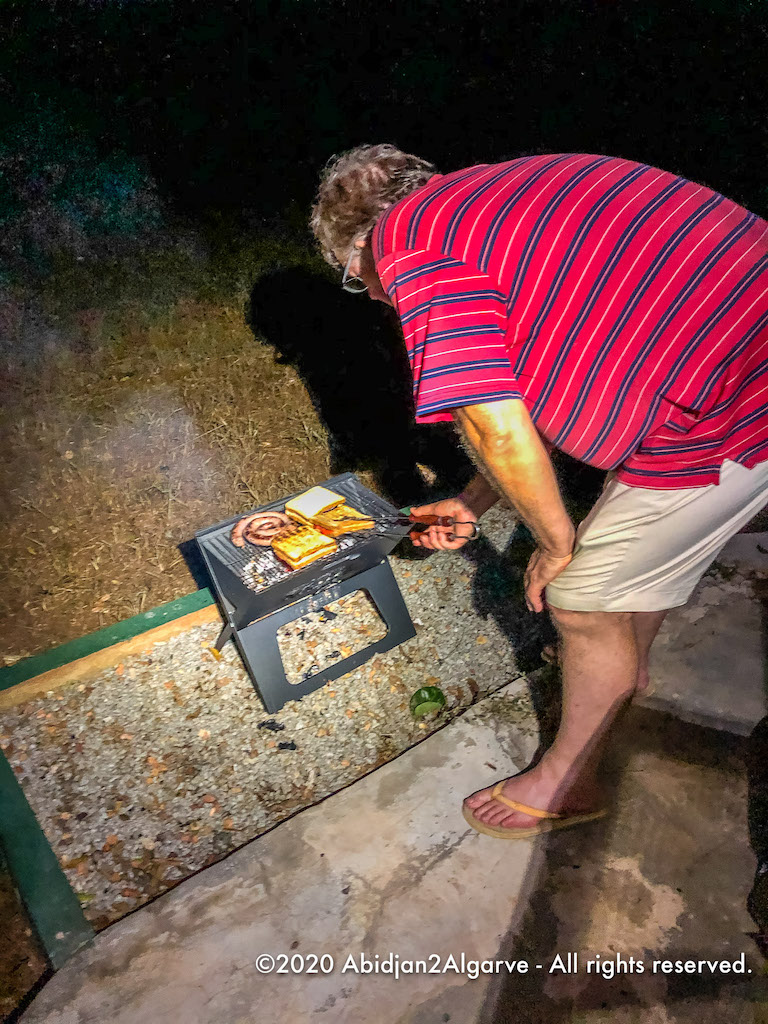
Later we set up our newly acquired folding braai to prepare dinner in a very South African fashion with boerewors, marinated chicken thighs and a braaibroodje (barbecued sandwich). Unfortunately missing was the pap but we had tomatoes, onions and lettuce. Braaimaster Trevor did a wonderfully delicious job! Afterwards a quick clean up and to bed. The alarm was set for 05h30 to go for a hike.
We slept well in our new beds. Although we were woken up a couple of time by gun shots in the distance. There were about ten fired by poachers who hunt in the cover of darkness for antelopes and gazelles. Unfortunately there is very little the park rangers can do about it as the park is not fenced, remember large parts being swamp, and they are also understaffed and underfunded to fully protect the flora and fauna there.
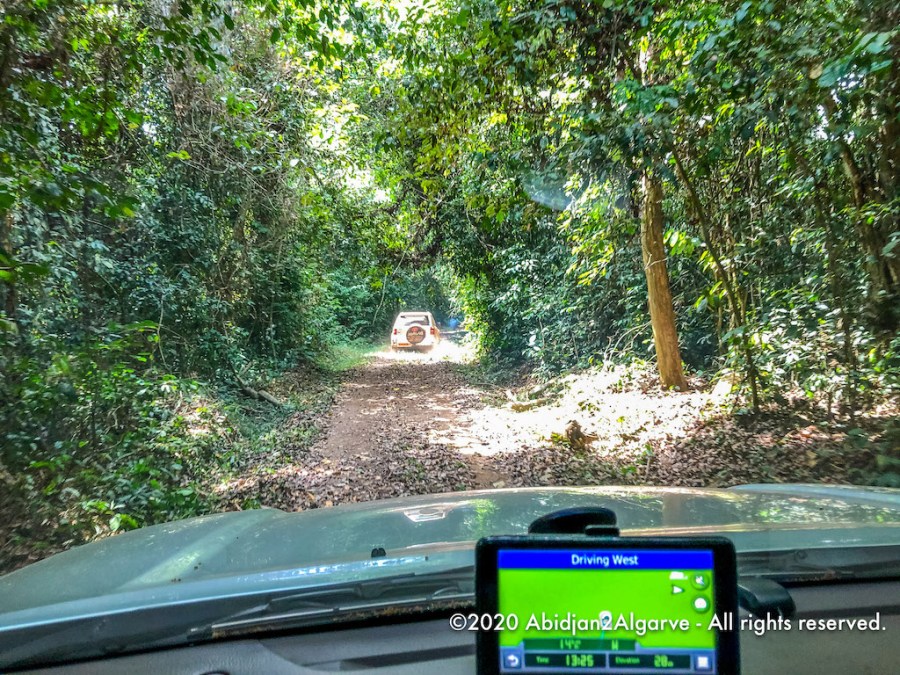
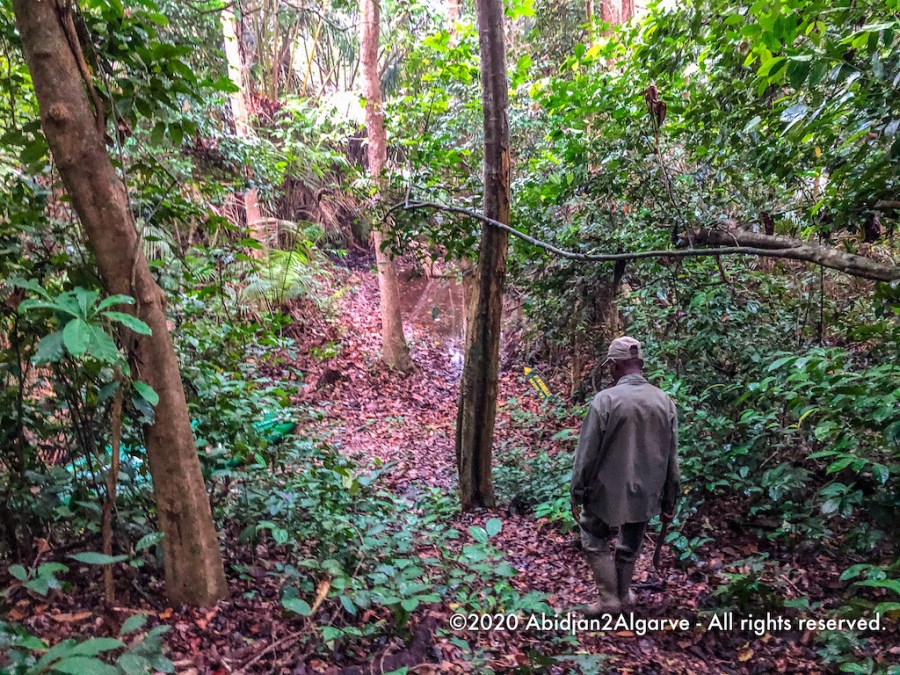
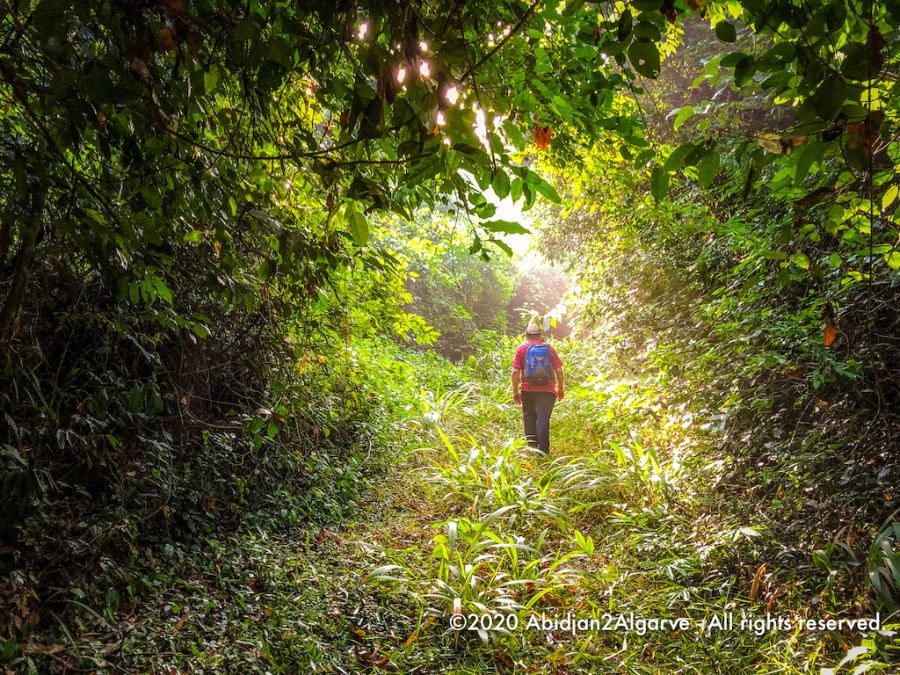
When the alarm clock went off, it was still dark. We got going slowly and managed to leave camp a little later than anticipated. Omar led the way along the old track. Nature had gotten hold of it a various sections again and a large tree had fallen across the path that had to be bypassed through the forest. The bush was so thick that you could walk past any animal in 5 meters distance and you would not even notice it. Once in a while there were little opening in the canopy and you could see the magnificent large trees of the West African rainforest such as the fromager.
About an hour into the walk, we heard leaves and branches rustle in the near vicinity. Omar spotted a troop of monkeys in a nearby tree top chasing each other. We watched them for a few minutes before they disappeared into the green thickness of the rainforest again. The track leads to a loop at which lies the former German research station. It was built when the park opened in 1981 and was abandoned only four years later in 1985. Today you only see the foundations of the few buildings that once existed there. A small path leads past the ruins 20 meters down a slope towards the mangroves. This place is called “Débacarcadère Petite Île”. From here you can take a guided tour in a canoe or kayak to the ‘small island’ where chimpanzees apparently live. The larger island can be reached from a different point. That island is the home of the well-known lonely chimpanzee Ponso. His sad story can be read in this wonderful article by AFP journalist Christophe Koffi.
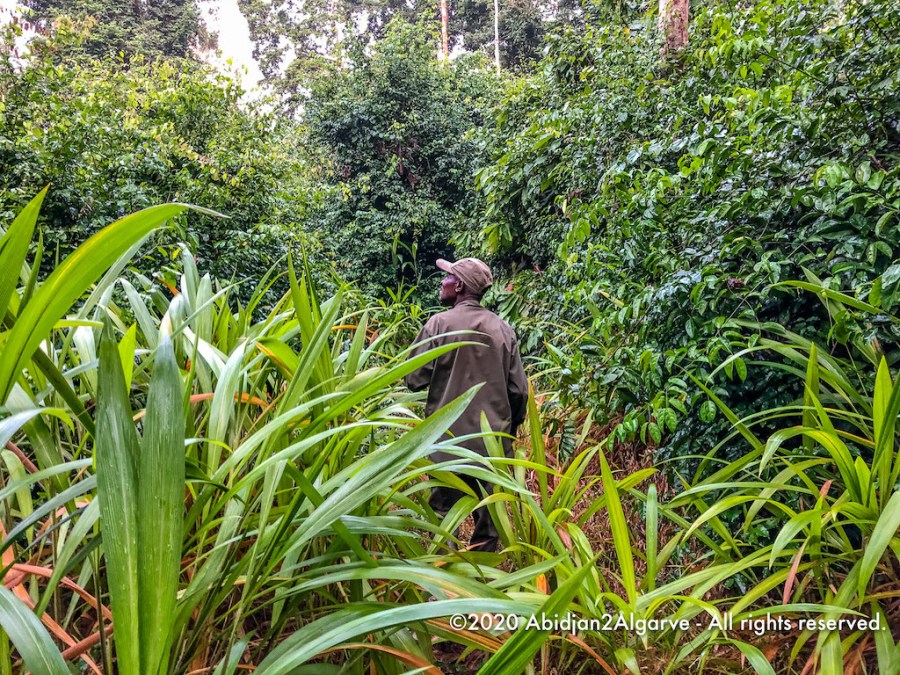
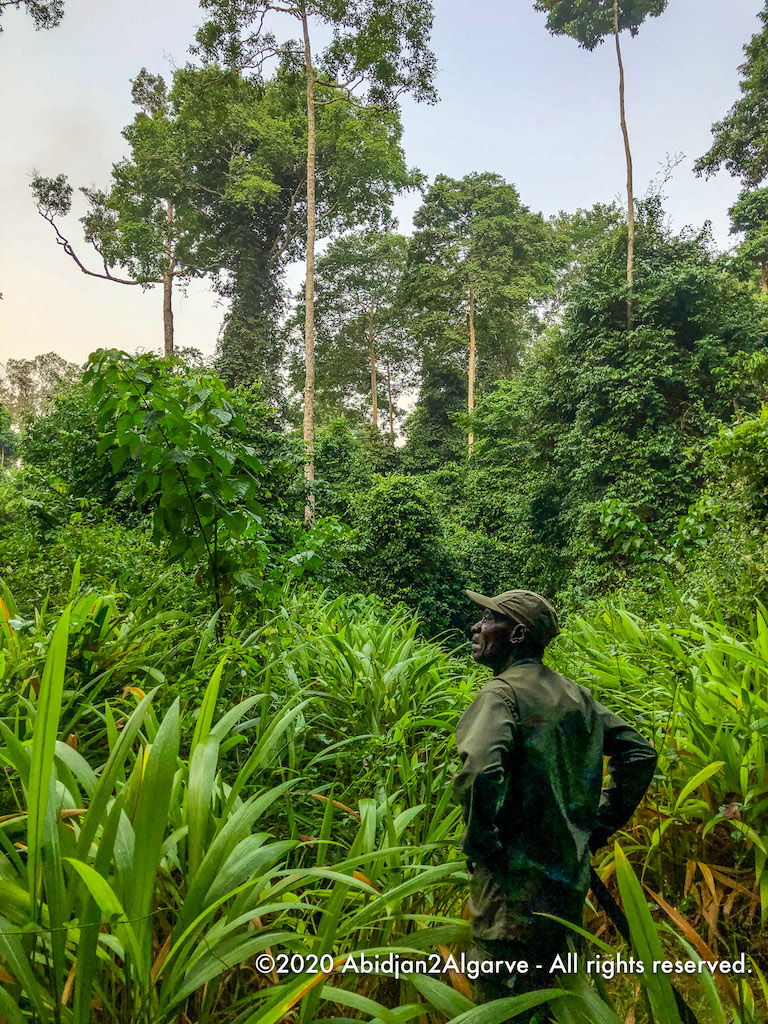
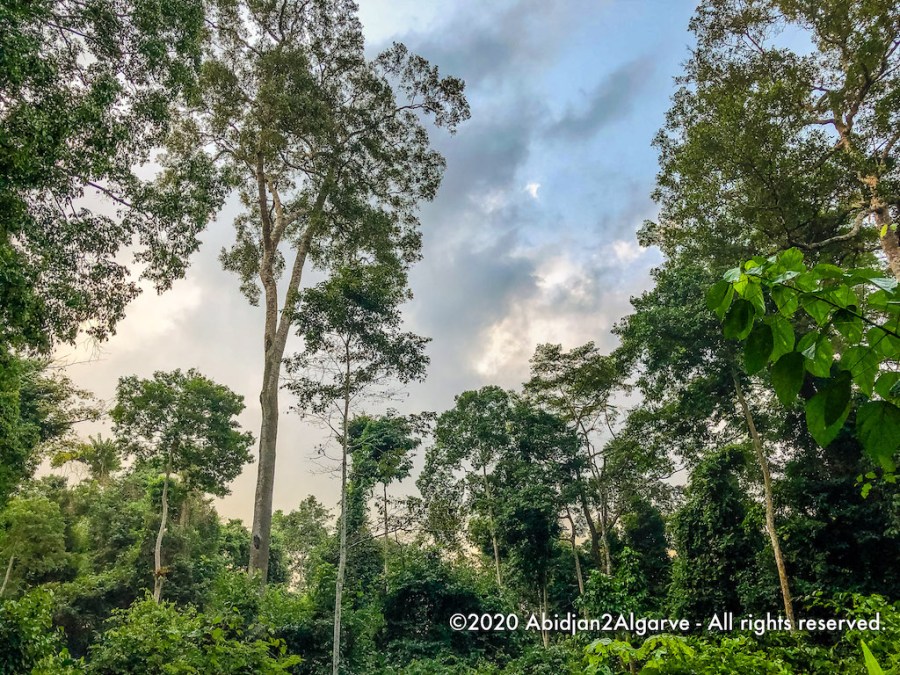
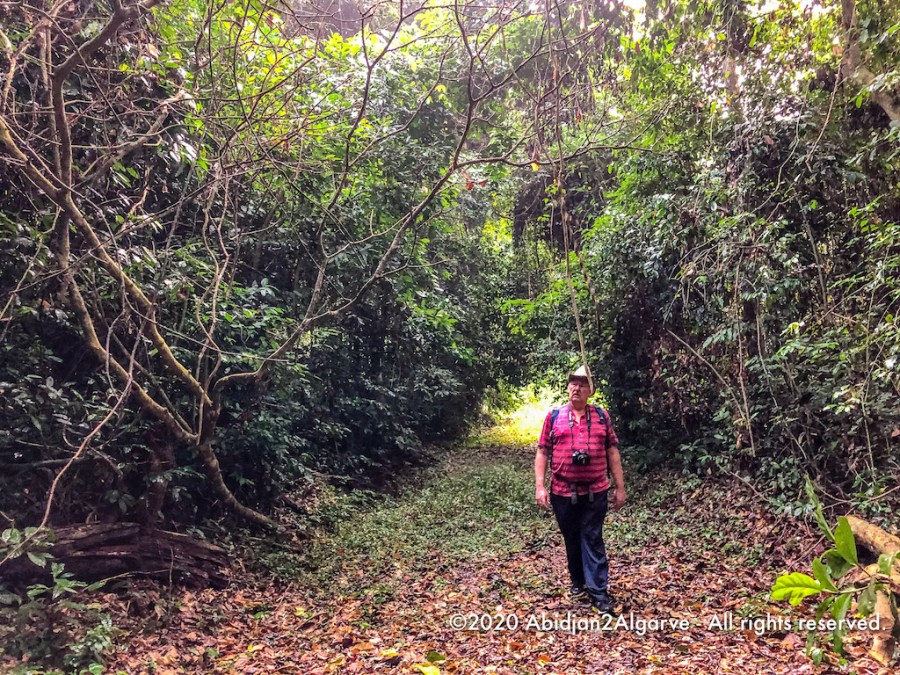
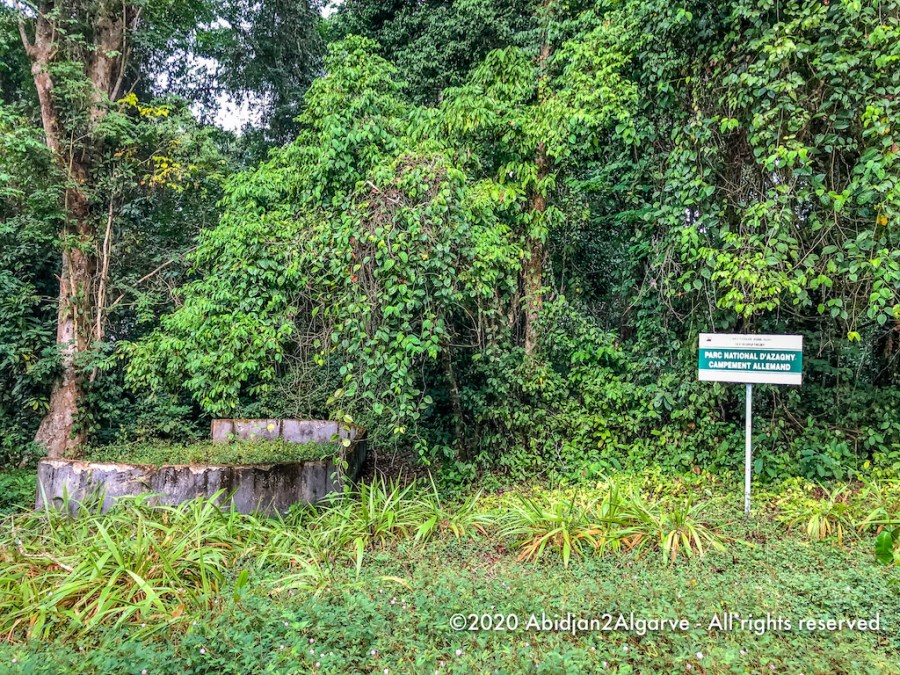
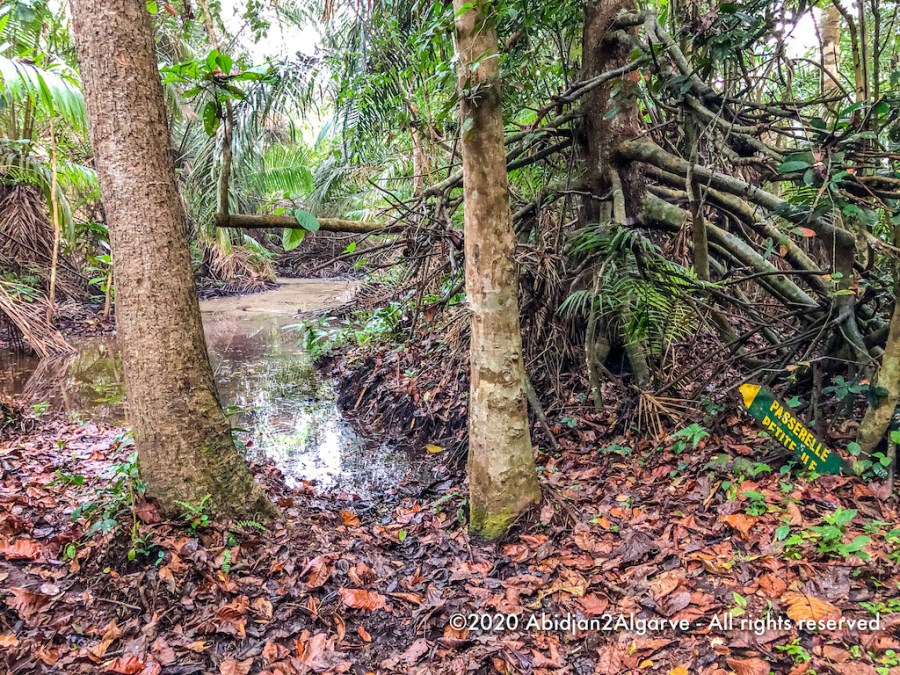
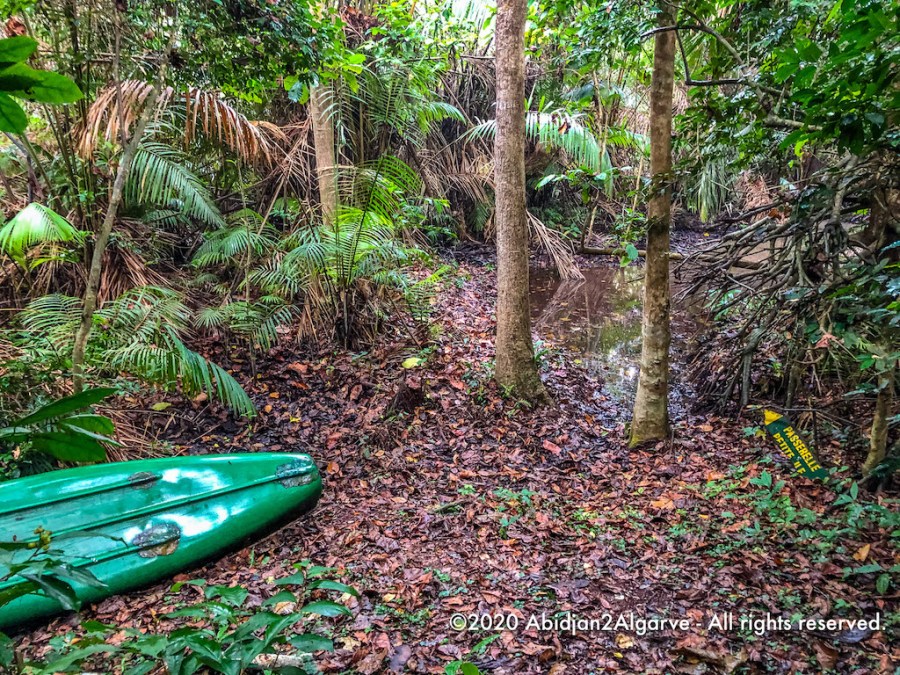
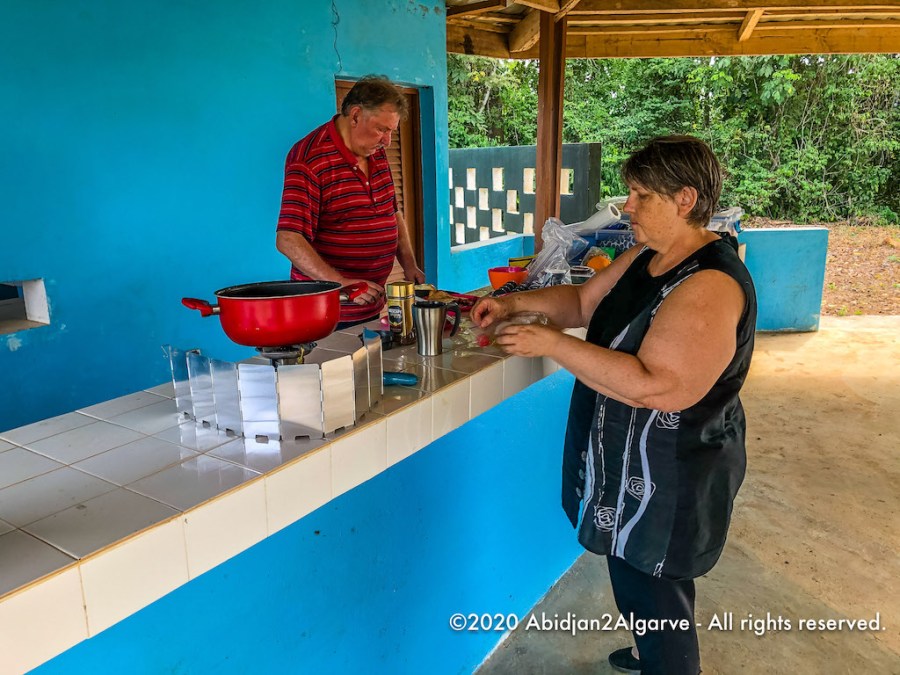
After a quick look at the water infested with crocodiles and snakes of many sorts, we climb back up the bank and head back. The sun had made it up and broke through some openings in the canopy to magically light up the forest. After the rains of the previous afternoon, the air was thick and the forest very damp. Humidity at its peak. An hour later and having walked about 8 kilometres in the coolness of the morning we reached camp nevertheless drenched in sweat and exhausted. Charlotte had stayed in camp and had gotten breakfast ready. That’s what we needed. A hearty breakfast with bacon, fried eggs and toast.

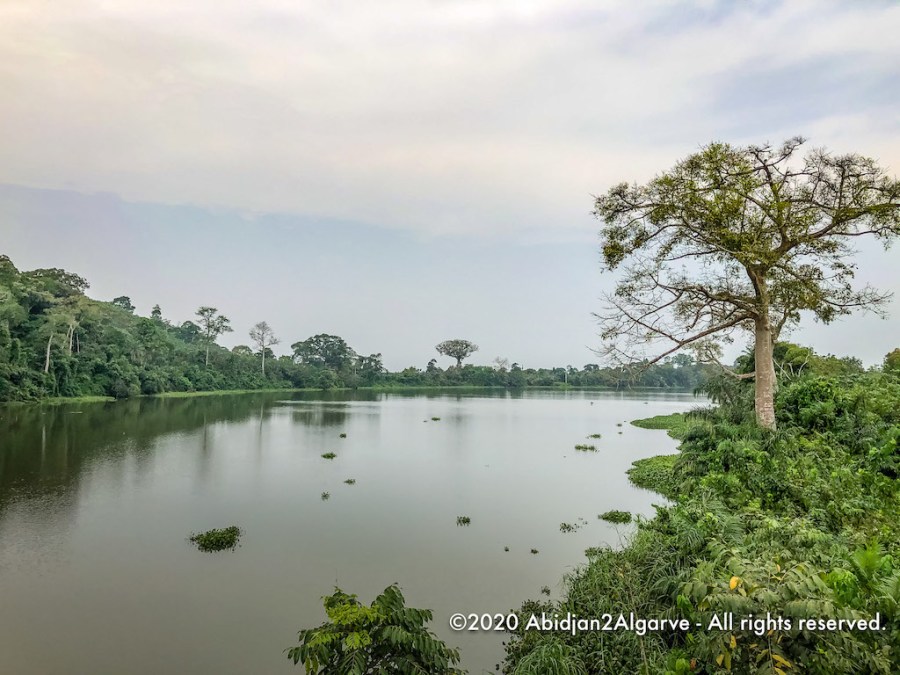
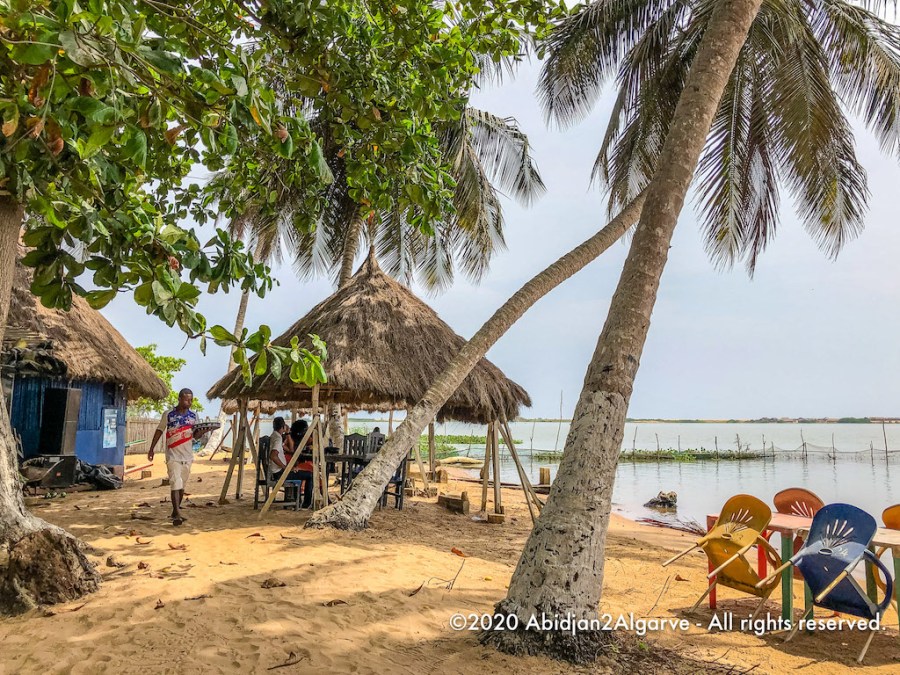
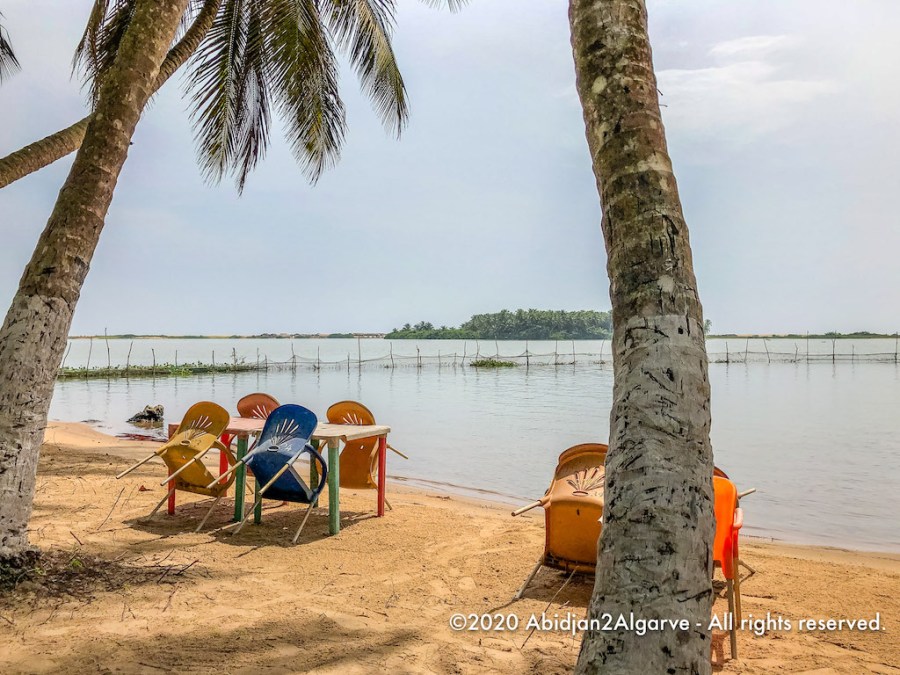
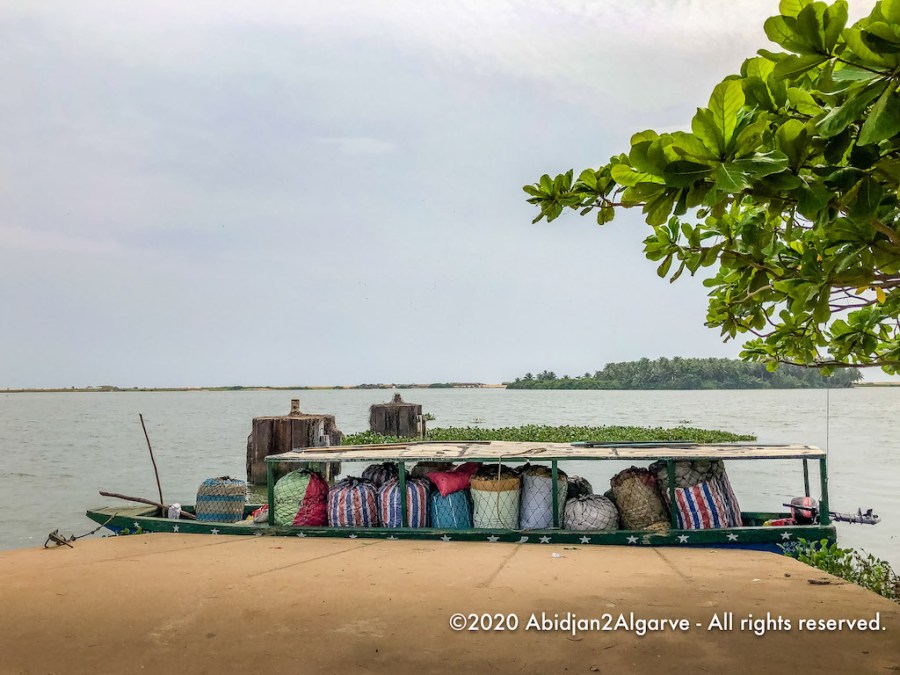
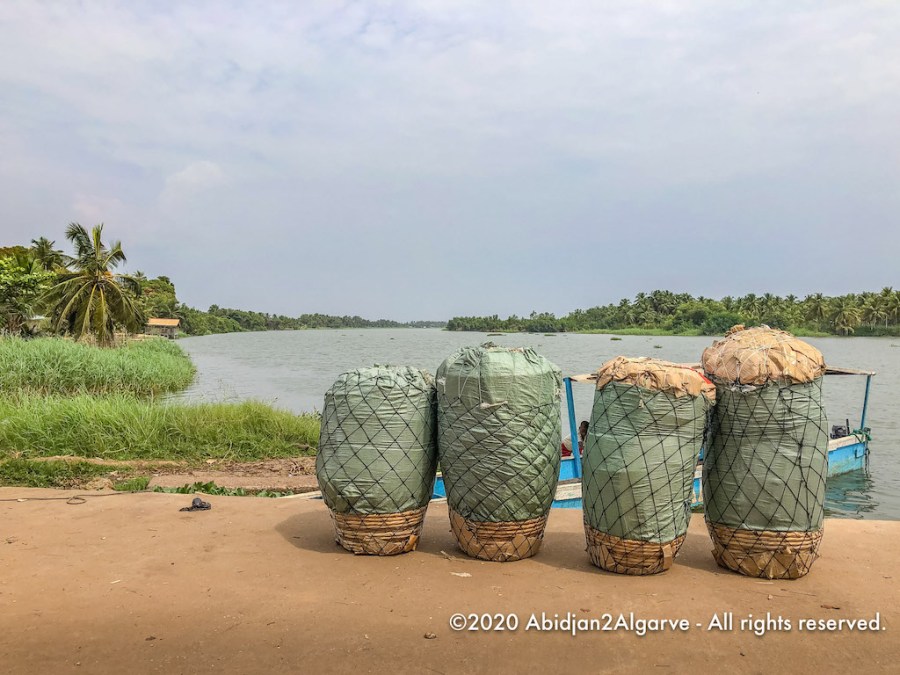
Quickly the decision had been made to break up camp and explore a bit the area while we are here. Trevor wanted to see the shoreline and get close to the beach. We said our goodbyes to everyone, and headed towards Grand-Lahou, the next bigger town. The road quality varied greatly from a nice smooth surface to a slalom course where you sometimes did not know which route is less bad. We turned South and drove along the Bandama River. Large fields on both sides of the road with a few palm trees here and there. Then the road ended at the lagoon Tagba in Braffedon. We could see the large dune banks that lie between us and the Atlantic Ocean on the other side. As soon as we had arrived we had handful young men around our cars who all wanted to offer their service to take us across to the beach. We politely refused and went for a cold drink instead.
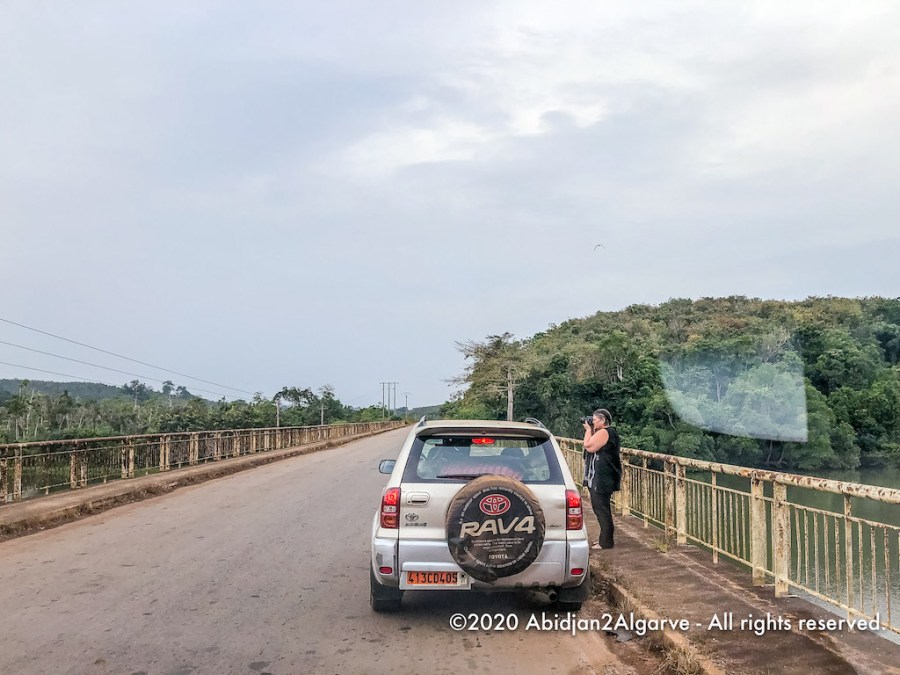
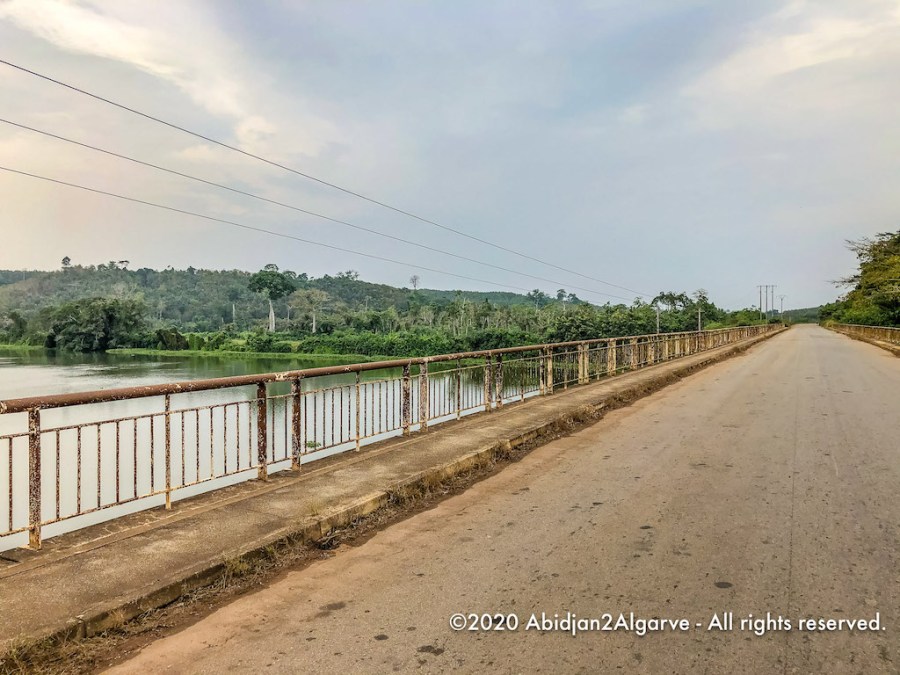

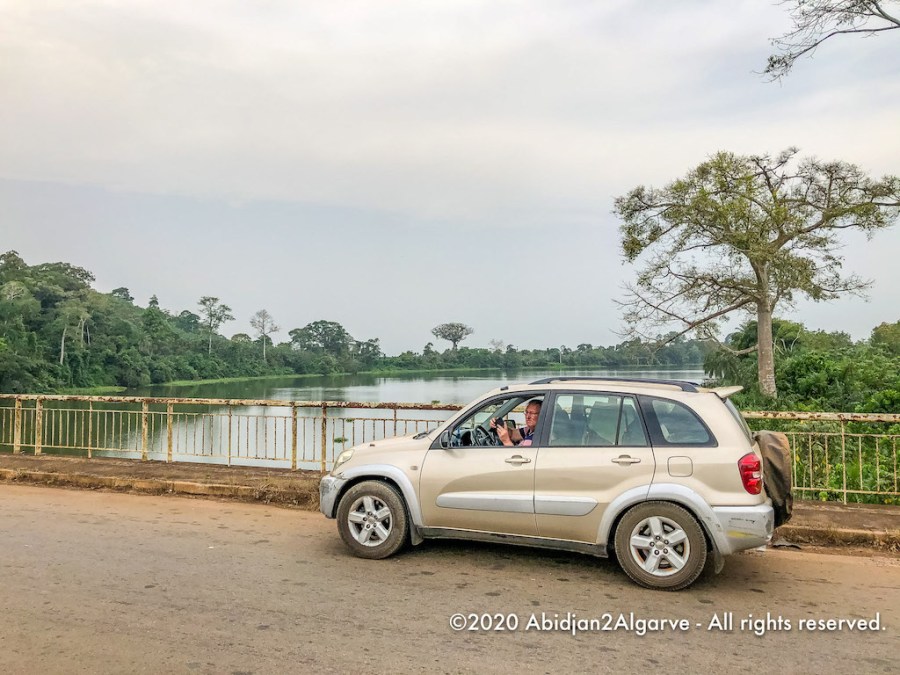
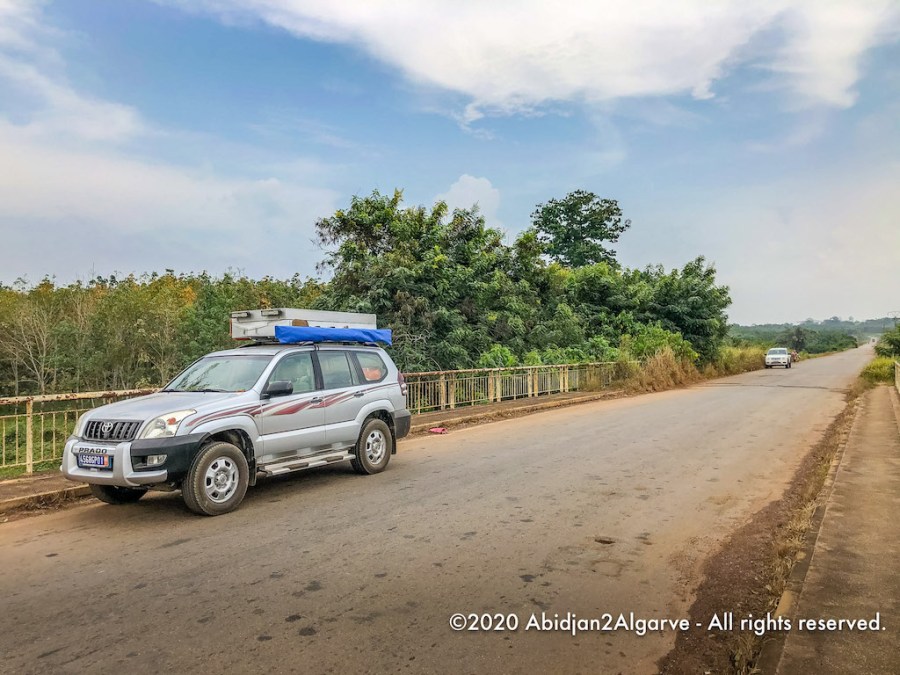
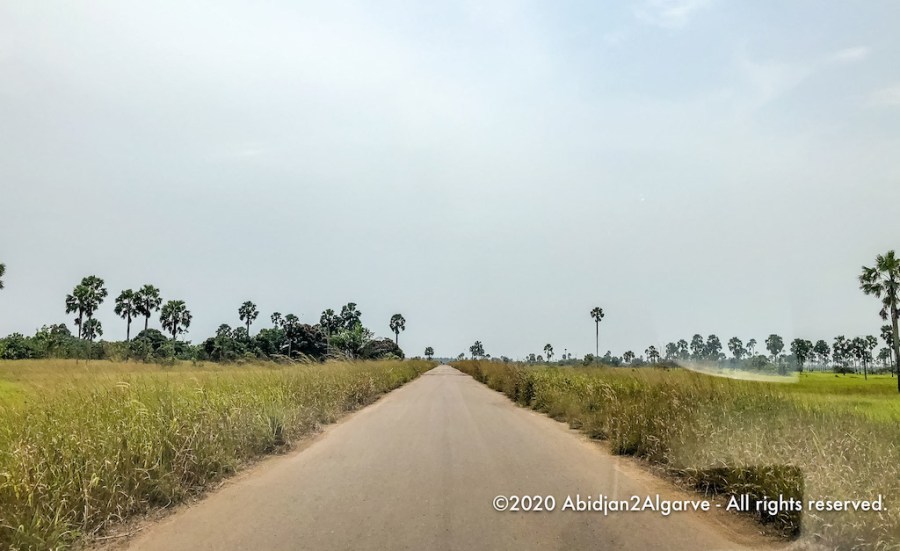
We still had to drive all the way back to Abidjan and did not want to arrive too late. So we had to leave this beautiful tranquil place again. Along the way, we were spotted by Lt. Soro who apparently had his Sunday lunch in a roadside restaurant along the route and called to ask if all was well, how our stay was and wished us a safe journey home. Eeyore often struggled gaining speed again after Ulrich had to break hard for potholes or when climbing up hills. Ulrich’s car is quite a bit heavier and the engine is less powerful than THE RAV’s. Therefore, Ulrich sometimes saw THE RAV disappearing in the distance or around the bend or hill.
The real offroad test came when we decided to turn left off the main road towards Yopougon and make our way North to the motorway to possibly avoid any heavy Sunday afternoon traffic. The first couple of kilometres were nicely tarred but then signs of road works emerged and the comfortable ride turned into a challenge for men and machines. Loose sandy stretches and deep grooves made provided a good test track for what we might have to endure during our expedition ahead. We made it safely through the road works and reached the motorway back to Abidjan.
Conclusion
Overall it was a very successful weekend for all of us. We thoroughly enjoyed taking our expedition vehicles out for a test run, experienced what it will be like to live out of the car, set up camp, cook meals out of tupperware boxes, live without electricity (fortunately we had a weak 3G internet connection) and shower with refreshingly cold water. We had loaded the cars with most of the equipment we want to take on the expedition, except maybe with all the food supplies and all the clothes yet. Obviously, we noted down a few points we still have to buy or resolve before heading off for the real thing in a few weeks time. And on top, we greatly enjoyed the Ivorian countryside and hospitality in the National Park.
 Abidjan-Marrakech-Abidjan Overland Expedition 2023
You must be logged in to post a comment.