
After another chilly night, we packed up quietly, as the rest of the camp was still asleep. While closing my roof top tent, I knocked over my mug, spilled my coffee all over my fresh pair of trousers and onto my feet in flipflops. No coffee and a pair of trousers that are in need of washing. Bummer. Not a good start into the day.
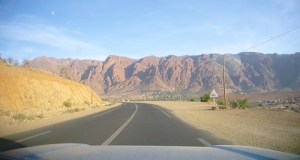
First stop was the petrol station in Tafraoute for a refill. Then we drove off, backtracking a bit the route we had come down from the mountain pass two days earlier. On a cold morning Eeyore struggled, but managed crawling up the hills. We turned northwest after the pass and a friendly wave at the gendarmes standing in the first sun light at a roundabout in the middle of the mountains. What a job!
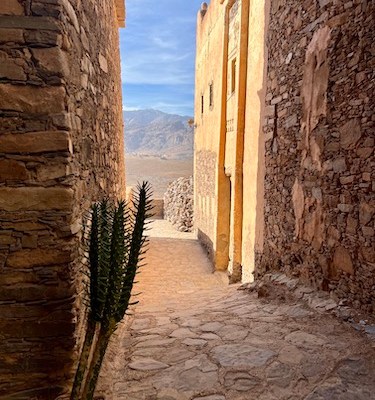
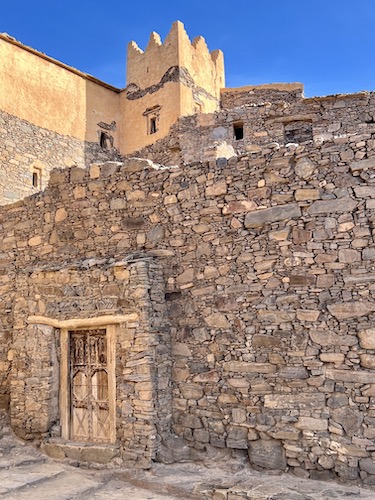
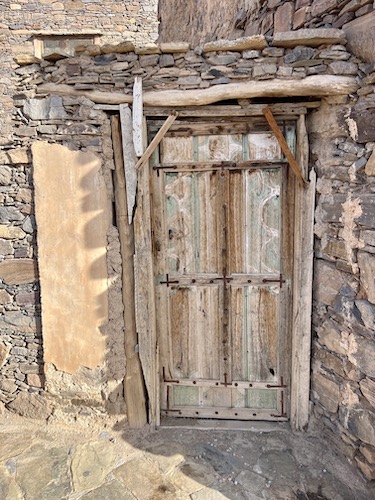
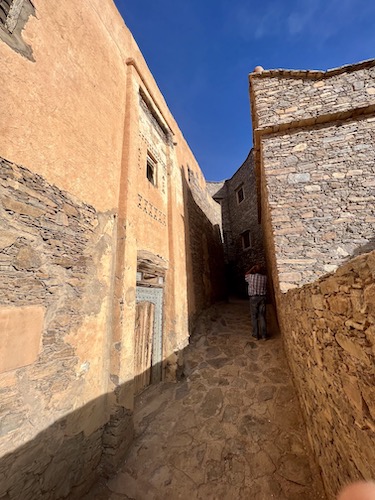
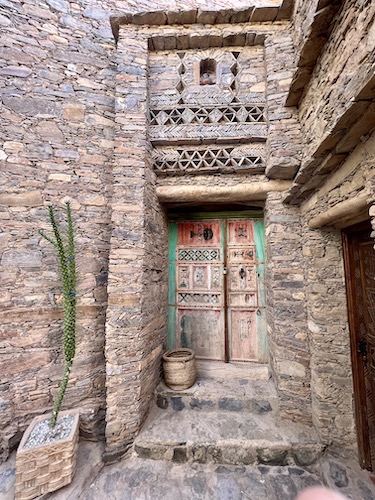
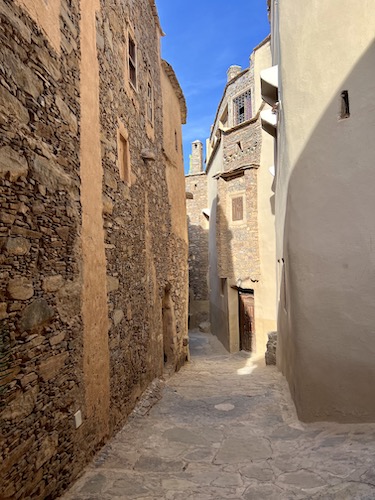
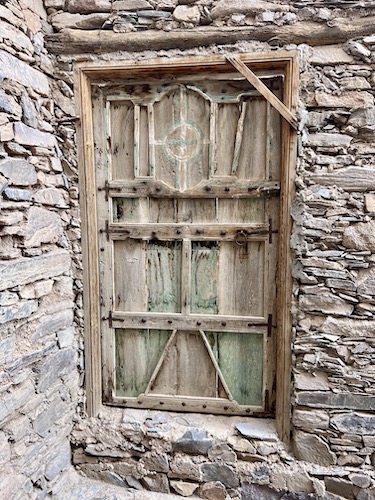
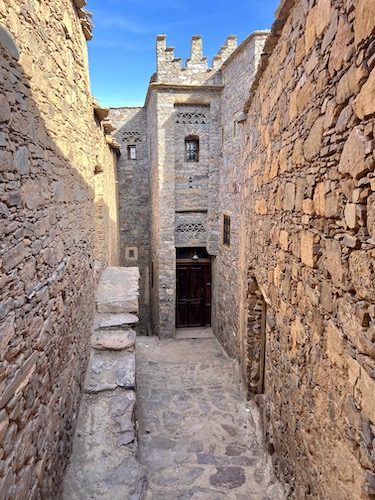
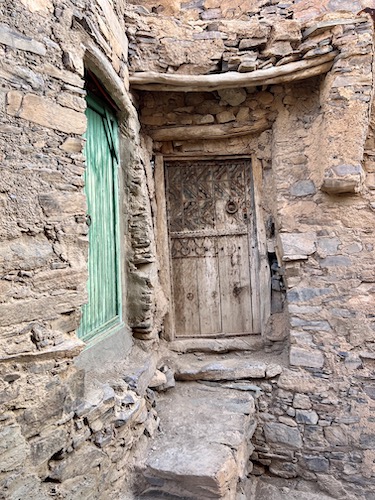
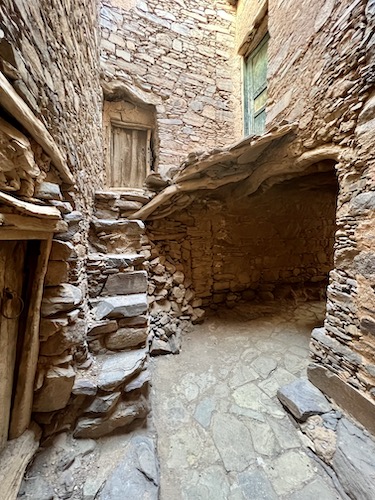
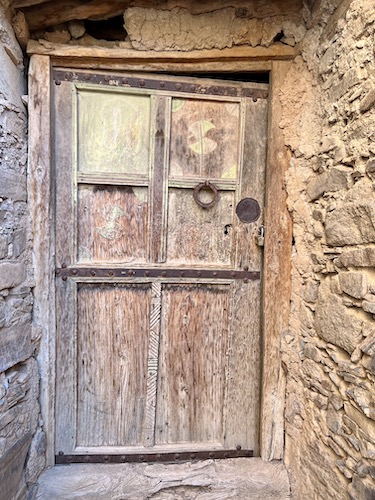
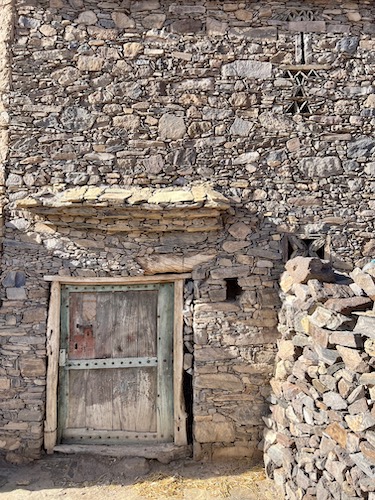
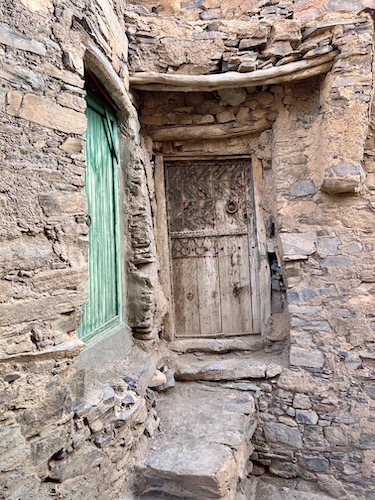
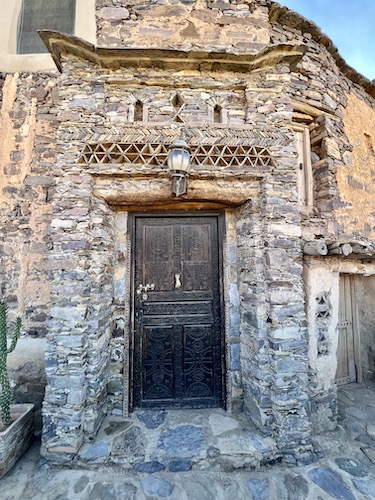
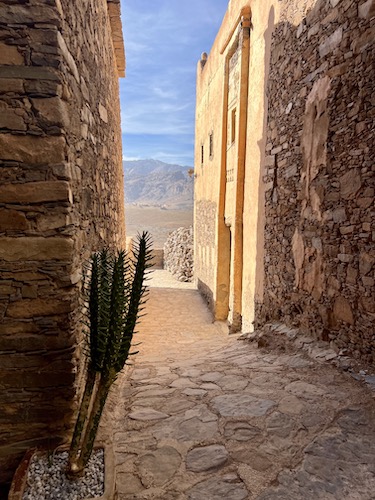
The mountains became less high and the valley wider. We were en route to a gem in the region, the Kasbah Tizurgane. Its foundation dates back around eight hundred years. Today, parts of it have been converted into a hotel. Other parts are still original and used to be used as living quarters and granary storage. Some parts, behind beautifully decorated locked doors, have unfortunately collapsed, but we have learned that a foundation has been set up to support individual owners to restore their part.
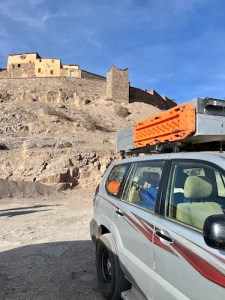
When we arrived, we found the main gate closed. Two French couples arrived shortly after. They told us that it was the same thing yesterday and it was supposed to be open today. One man went over to the hotel to ask when the main gate would open. Within a couple of minutes was the answer and he returned. We climbed the many stairs from the parking to the main gate. It was still locked. After bonking on the gate without reply, the Frenchman went back down to the hotel to ask. While he was gone, within two minutes, we heard someone unlocking the big old lock of the main gate and opened it. We paid our entrance fee of 20dh per person to the caretaker and entered the fortress. All thick walls are made from local rocks, carefully piled and smaller rocks were used to fill the gaps. Above doors they often used the rocks in a very creative artistic way to form patterns. The doors to the living quarters used to be elegantly decorated with carvings and paint. Other doors, much smaller, led to grain storages. Often the stairs leading to these doors were the attraction rather than the simple doors. We took lots of pictures and walked every pathway possible.
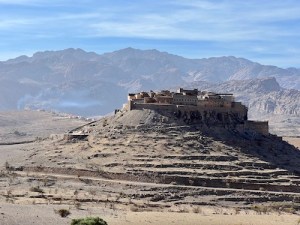
After a short chat with the Frenchies, we left and moved on a few kilometres to the Agadir Imhailen, an old grain storage, that is apparently still in use today. It lies on top of a large hill, easier to be defended against intruders in the past. That meant for us, it was difficult to get to it. We drove up to the village closest to the Agadir, parked our cars and asked some workers how to reach the Agadir. When we passed a house, an old man asked if we came to visit the Agadir, lying in the sun on the next hill, being surrounded by many collapsed old buildings and a few intact ones. We acknowledged and he started to make phone calls to see if he could get hold of the man with the keys. How kind of him! After several unsuccessful phone calls, mainly due to it being Friday after all and many people are elsewhere on Fridays before the midday prayers and the obligatory couscous lunch with family afterwards, we thanked him very much for his efforts and left.
We drove the last mountainous road of this trip out of the mountains and out into the plains south of the city Agadir.
First, it felt a bit weird to drive on a very straight road again, after the many hundred kilometres of winding roads, narrow and wide, gravel and tarred through the Atlas and Anti-Atlas Mountains we drove this last week. We came closer and closer to the city and saw many shops with apartments above, factories and warehouses on both sides of the road. Traffic was dense as many people rushed to the nearest mosque or home.
We turned southbound onto the famous Route National 1, that will take us eventually all the way to the border with Mauritania. Here, it is a very nice wide 2+2 road, that has quite a number of roundabouts though.
When we drove through the city of Tiznit, we almost took the wrong turn, as hundreds of people exited the main mosque in the city centre after Friday prayers and I was more concerned not hitting anyone than which street we needed to drive into. A U-turn solved the problem and we were on our right way to Mirleft.
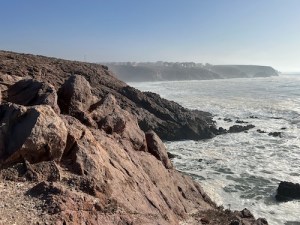
The village of Mirleft is perched on top of the gigantic ocher-colored cliffs bordering the ocean. The view of the Atlantic coast is magnificent, especially from Fort Tidli, built in 1935 as a military fort, but now abandoned. But Mirleft is above all renowned for being an excellent spot for water sports and the waters are known to be rich in variety and quantity of fish.
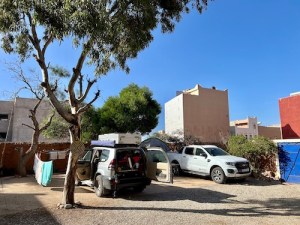
The camping site was found easily near the ocean and we set up camp. Here, Trevor noticed that the roller shutter of his Ford Ranger pickup didn’t respond to any switch flicking or remote switching either. Ulrich to the rescue. A quick search online revealed, that this, unfortunately, seems to be a common problem with this system and the easiest solution is to disconnect the battery for two minutes and then reconnect. I did as suggested and lo and behold, the roller shutter showed signs of life again and worked as supposed to. Quick fix fortunately, but what would they have done without being able to access all their gear in the back of the bakkie?
Afterwards we had a quick bite to eat and then went to see the ocean and enjoyed the walk and the fresh sea breeze on the cliffs near the old fort.
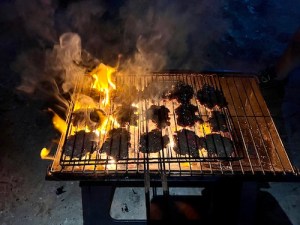
Once back, Brahim sacrificed himself and walked into town to buy some new minced meat for dinner. The intended BBQ chicken had gone very stinky in Charlotte’s cooler box. Dinner saved thanks to Brahim. He also seasoned it very well tonight for the braai. It was delicious.
The forecast for tonight is good. The sea will keep the temperature at a mild 18°C. With more humidity and not being cold any longer, we should have a very comfortable night!
Happy days!


You must be logged in to post a comment.